
You land at Orly, clear the doors at arrivals, and realise the Palace of Versailles is nowhere near as close as it looked on the map the night before. It isn’t. The two sit on opposite sides of the southwestern suburbs, and there’s no direct train linking them — a detail that trips up a lot of first-time visitors planning a same-day palace trip straight off a flight.
The road distance is roughly 24 km, and depending on how you travel, realistic door-to-door time runs anywhere from about 35 minutes to well over two hours. This guide is for anyone flying into Orly who wants to reach Versailles without wasting a morning on transfers — families, couples heading straight to the gardens, and business travellers with a tight afternoon slot. A pre-booked private transfer takes the guesswork out of it, but it isn’t the only way to get there, and we’ll walk through all of them honestly.
Quick Answer: The Best Way from Orly Airport to Versailles
For most travellers, a private transfer is the best way from Orly Airport to Versailles: fastest door-to-door, no changes, and a fixed €€€ price regardless of traffic. A metered taxi (€€) runs close behind it in time but with less price certainty. The RER combination via Massy-Palaiseau is the cheapest at €, though it involves at least one change and roughly an hour of travel.
| Distance | Fastest option | Cheapest option | Most comfortable |
|---|---|---|---|
| ~24 km (15 miles) by road | Private transfer / taxi (off-peak) | RER C via Massy-Palaiseau | Private transfer |
Understanding the Orly Airport → Versailles Route
Orly sits south of central Paris; Versailles sits to the southwest, on the far side of the Hauts-de-Seine and Yvelines suburbs. On paper they look close. In practice, you’re crossing the city’s southern arc rather than heading straight across it.
Road journeys typically follow the A86 motorway, often described locally as Paris’s “super-périphérique” — the second ring road that loops around the capital roughly 8–16 km out from the centre. Some routings also pick up the N118 for the final stretch into Versailles. There’s no dramatic landmark on this leg the way there is heading into central Paris, but drivers who do this route regularly will point out the Rungis international food market complex as you skirt past it near the start of the journey.
There is no direct train or RER line between Orly and Versailles — that’s the single most important thing to know before you plan around a train timetable. Every rail option involves at least one change, usually at Massy-Palaiseau or via a central Paris interchange. The A86 also has a known evening squeeze: traffic between roughly 17:00 and 19:30 can push a 45-minute drive past 90 minutes, which is worth factoring in if you’re arriving on a late-afternoon flight.
Your Transfer Options, One by One
Price and comfort move in opposite directions here — the fastest, least effort options cost more, and the cheapest option asks the most of you and your luggage.
Private Transfer
Verdict: the option that removes every decision after you land.

A driver waits in the arrivals hall with your name, tracks your flight, and takes you straight to the Palace entrance by road — mostly via the A86. No changes, no station stairs, no working out which RER branch goes where.
- Time: roughly 35–70 minutes, depending on time of day
- Price level: €€€, quoted per vehicle, not per person
- Luggage: full boot space, ideal for families or anyone with more than a carry-on
Pros:
- Fixed price agreed before you travel, regardless of A86 traffic
- No connections, no platform-finding with suitcases
- Drop-off right at the Palace, not a 10-minute walk away
Cons:
- Costs more upfront than public transport
- Needs booking ahead rather than hailing on the spot
If you’re travelling as a family or a small group, this is worth booking before you fly rather than deciding at the taxi rank.
Taxi
Verdict: fast, but you’re at the mercy of the meter and the clock.

Metered taxis wait at the official rank outside arrivals. There’s no official flat-rate fare between Orly and Versailles — unlike some airport-to-city routes — so what you pay depends entirely on traffic and time of day.
- Time: roughly 35–50 minutes off-peak, 50–90+ minutes during the evening A86 squeeze
- Price level: €€, metered, per vehicle
- Luggage: boot space for a couple of suitcases, tighter for four large bags
Pros:
- Available on arrival, no advance booking needed
- Same road route and speed advantage as a private transfer
Cons:
- No price certainty — the meter runs with the traffic
- Rank queues can add 10–15 minutes at busy arrival banks
Honestly, if you’re travelling solo or as a pair with light bags and don’t mind a slightly unpredictable fare, a taxi does the job fine.
RER Combination (T7 Tram + RER C via Massy-Palaiseau)
Verdict: cheap and doable, but plan for a change with your bags in hand.
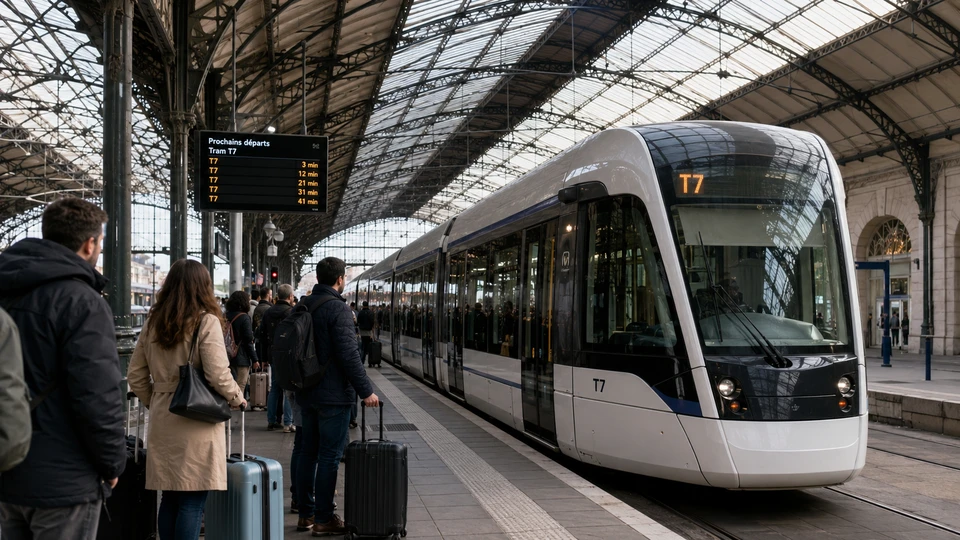
This is the standard public transport route. Take the T7 tram from Orly to La Fraternelle, then walk about three minutes to Rungis-la-Fraternelle RER C station. From there, ride RER C to Massy-Palaiseau, change onto another RER C service, and continue to Versailles Chantiers. A standard Île-de-France Navigo day pass covering zones 1–5 works for the whole journey.
- Time: around 56 minutes, plus onward travel from Versailles Chantiers to the Palace (it’s not walking distance)
- Price level: €, per person
- Luggage: manageable with one bag each; genuinely awkward with full suitcases and stairs
Pros:
- Cheapest option by a wide margin
- Runs frequently through the day, no booking required
Cons:
- At least one change, sometimes two
- Versailles Chantiers isn’t next to the Palace — you’ll need a short taxi, bus, or a 20-minute walk
For a solo traveller with a backpack, this is genuinely fine. With a family and four suitcases, it’s a harder sell.
You can check official train schedules and connections on the SNCF timetable page
Bus + RER (Line 91.10 to Massy-Palaiseau)
Verdict: a slightly different way into the same rail network, worth knowing if the tram is disrupted.
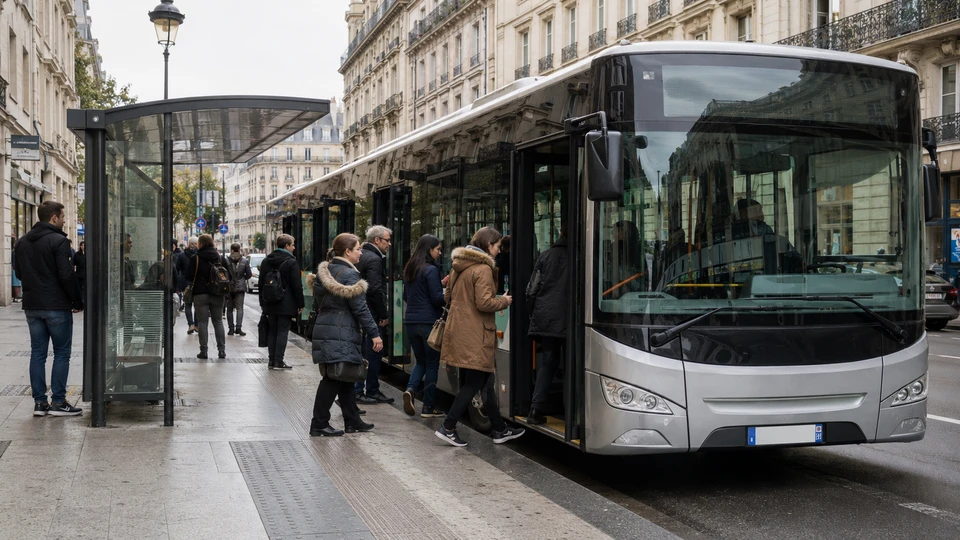
Bus 91.10, run by Albatrans, links Orly directly to Massy-Palaiseau station in about 30 minutes, skipping the OrlyVal/tram leg entirely. From Massy-Palaiseau, it’s the same RER C connection onward to Versailles Chantiers, or you can pick up RER C toward Versailles Château Rive Gauche, which is only a 5–10 minute walk from the Palace gates — noticeably closer than Chantiers.
- Time: roughly 55–70 minutes total, route-dependent
- Price level: €, per person
- Luggage: same limitations as the tram-RER combo
Pros:
- One less change than the tram route if you catch the Rive Gauche branch
- Useful backup if T7 tram services are disrupted
Cons:
- Bus frequency is lower than the tram
- Still involves navigating an unfamiliar station with bags
Ride-Hailing (Uber, Bolt)
Verdict: a reasonable middle ground if you’re comfortable booking through an app.

Uber and Bolt both operate on this route, with pricing that moves with demand rather than staying fixed. On a good day it can undercut a metered taxi; during surge pricing or bad weather, it can end up costing about the same or more.
- Time: roughly 35–50 minutes off-peak, similar to a taxi
- Price level: €€, variable with surge pricing
- Luggage: standard boot space; request XL for four passengers with bags
Pros:
- Price shown before you confirm the ride
- No rank queue if a driver is already nearby
Cons:
- Surge pricing during storms or commuter peaks
- Meeting point logistics at a busy terminal can be fiddly for first-timers
Side-By-Side Comparison
| Option | Door-to-door time | Price level | Luggage | Transfers needed | Best for |
|---|---|---|---|---|---|
| Private transfer | 35–70 min | €€€ | Full boot, per vehicle | 0 | Families, groups, tight schedules |
| Taxi | 35–90 min (traffic-dependent) | €€ | Moderate | 0 | Solo/pairs wanting speed on arrival |
| RER combo (T7 + RER C) | ~56 min + onward leg | € | Awkward with big bags | 1–2 | Budget solo travellers |
| Bus 91.10 + RER C | ~55–70 min | € | Awkward with big bags | 1 | Budget travellers avoiding the tram |
| Uber / Bolt | 35–50 min off-peak | €€ | Standard/XL | 0 | Tech-comfortable travellers, flexible budget |
Which Option Fits You?
Families with young kids: the RER changes with a stroller and two suitcases are more trouble than they’re worth. A private transfer with a child seat pre-arranged removes the stress before it starts.
Couples on a short Paris trip: a taxi or ride-hailing app is perfectly reasonable if you’re travelling light and want to be at the Palace gates within the hour.
Groups of four or more: split four RER tickets against one €€€ private transfer fare and the per-person maths often favours the transfer, especially once you add in luggage hassle.
Solo budget travellers: the T7 tram to RER C route is genuinely fine with a single backpack. Don’t overthink it.
Travellers with lots of luggage: avoid the rail combo. Between the tram, the walk to Rungis-la-Fraternelle, and the change at Massy-Palaiseau, stairs and platforms with heavy suitcases add real friction.
First-timers in Paris: a private transfer or pre-booked taxi means one less unfamiliar system to figure out on your first hour in the country.
Elderly or reduced-mobility travellers: door-to-door road transport avoids station stairs entirely — worth prioritising over the cost saving of the train.
The Case for Booking a Private Transfer with Top Paris Transfer
For a family of four, four separate RER tickets at € each can add up to close to what a €€ private transfer costs for the whole vehicle — and that’s before anyone’s dragged a suitcase up a station staircase. A private transfer is priced per vehicle, not per head, which is where the maths tends to flip in its favour for groups.
Your driver tracks your flight, so a delay at Orly doesn’t mean a missed pickup — they’ll be waiting in the arrivals hall with a name sign regardless of what time you actually land. The price is agreed before you travel, so an evening arrival hitting A86 traffic doesn’t turn into a higher fare the way a metered taxi would. Child seats can be arranged in advance, luggage space isn’t a concern, and cars are available around the clock, not just during station operating hours.
A family flying in from a delayed evening connection, aiming to catch the last hour of the gardens before closing, is exactly the scenario this solves: no time lost working out an RER branch change at Massy-Palaiseau with tired kids and four suitcases, just a straight run up the A86 to the Palace gates.
👉 Book your private transfer from Orly Airport to Versailles with Top Paris Transfer — fixed price, driver waiting at arrivals.
When to Travel: Traffic & Timing on This Route
Morning (before 09:00): generally the clearest window on the A86, with road journeys close to the lower end of the time range.
Midday to early afternoon: still reasonably light, and a sensible window for a same-day arrival-to-Palace run.
Evening (17:00–19:30): this is the A86’s known squeeze. A journey that takes 45 minutes off-peak can push past 90 minutes, and metered taxi fares climb with it.
Seasonally, spring and summer weekends bring heavier day-tripper traffic into Versailles itself, on top of the usual commuter pattern on the A86 — worth building in extra time if you’re arriving on a Saturday afternoon in peak season.
What This Route Really Costs
Public transport is the € option here — a standard Navigo day pass covering zones 1–5 handles the whole RER combination, and it’s the cheapest way to reach Versailles from Orly by a clear margin, priced per person.
A metered taxi sits at €€, priced per vehicle rather than per person, which starts to close the gap for two or three travellers sharing a ride. There’s no official flat fare on this route, so the final number tracks the meter and the traffic.
A private transfer is €€€, but because it’s priced per vehicle, a family or group of four often finds the effective cost per person lands closer to the taxi than the sticker price suggests — without the meter uncertainty.
Costs that don’t show up in the headline price: the T7 tram and RER legs both require separate validation, evening taxi fares climb once you’re into A86 rush hour, and if you’re aiming for the Palace itself rather than Versailles Chantiers station, budget a short taxi or a 20-minute walk on top of the train journey. For a typical family of four prioritising time over budget, the private transfer usually works out as the more predictable spend once every extra leg is accounted for.
Mistakes to Avoid on the Orly → Versailles Journey
- Assuming there’s a direct train. There isn’t. Build in time for at least one change, whichever rail route you pick.
- Getting off at Versailles Chantiers thinking you’re at the Palace. You’re not — it’s a further short trip away. Versailles Château Rive Gauche is the closer station, just 5–10 minutes on foot from the gates.
- Booking a taxi during the 17:00–19:30 window without padding the schedule. The A86 evening squeeze is predictable; plan around it rather than being surprised by it.
- Dragging four suitcases onto the T7 tram and RER C without checking the change at Massy-Palaiseau first. It’s doable, but the stairs and platform changes aren’t fun with heavy luggage.
- Not pre-booking on a summer Saturday. Weekend day-tripper traffic into Versailles adds to the usual commuter load on the A86.
- Expecting a flat taxi fare like some airport routes have. There isn’t one for Orly–Versailles — the meter runs with traffic, so a pre-agreed private transfer price is the only way to lock in a number in advance.
FAQ
Is there a direct train from Orly Airport to Versailles?
No. Every rail route involves at least one change, typically via Massy-Palaiseau or a central Paris interchange, so budget roughly an hour rather than expecting a single-seat journey.
How much does a taxi cost from Orly to Versailles?
There’s no official flat rate on this route. Expect an €€ metered fare that varies with traffic, priced per vehicle rather than per person — cheaper to split across two or three travellers.
How long does it take to get from Orly Airport to Versailles?
By road, 35–70 minutes depending on traffic, with the A86 running slower between 17:00 and 19:30. By public transport, budget around an hour for the RER combination, plus onward travel once you reach the station.
Which train station is closest to the Palace of Versailles?
Versailles Château Rive Gauche, reachable via RER C, sits just 5–10 minutes’ walk from the Palace gates. Versailles Chantiers, the other common arrival point, is further away and usually needs a short taxi or bus onward.
Is a private transfer worth it for a family?
For groups of three or more, the per-vehicle pricing often works out close to splitting individual train or taxi fares — and it removes the need to manage a change at Massy-Palaiseau with kids and luggage in tow.
Will there ever be a direct line between Orly and Versailles?
Eventually. The future Grand Paris Express Métro Line 18 is planned to link Orly Airport directly to Versailles via Massy-Palaiseau, but it’s still under construction and not expected to open until sometime after 2030.
Does the RER route work with heavy luggage?
It’s manageable with one bag per person, but the tram-to-RER change at Rungis-la-Fraternelle and the platform change at Massy-Palaiseau both involve stairs — not ideal with full suitcases for a family.
Other Popular Blog You Might Need
- Best Ways To Get From Orly Airport to Hotel Cheyenne
- Best Ways To Get From Orly Airport to La Defense
- Best Ways To Get from Orly Airport to Le Marais
- Best Ways to Get from Orly Airport to the Eiffel Tower: Every Transfer Option Compared (2026 Guide)
